
🧬 Research Peptide Documentation Checklist & Science Guides
Start with documentation, not hype. Use this site to review COAs, HPLC and mass-confirmation language, lot traceability, and the science guides that help you compare research-use vendors more carefully.
Affiliate link. Research use only. Review our Disclosure and Terms before clicking through.
View partner offer (code PAGE)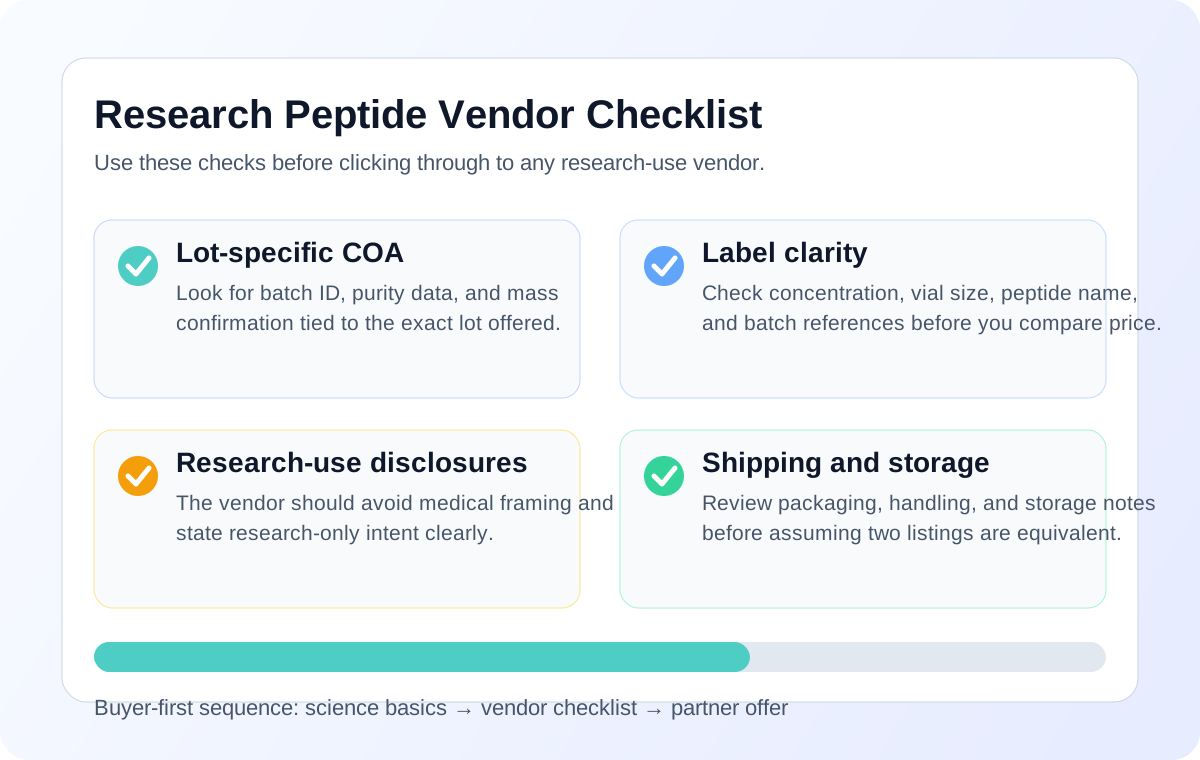
Start with the checklist before you compare price or click through to a partner vendor.
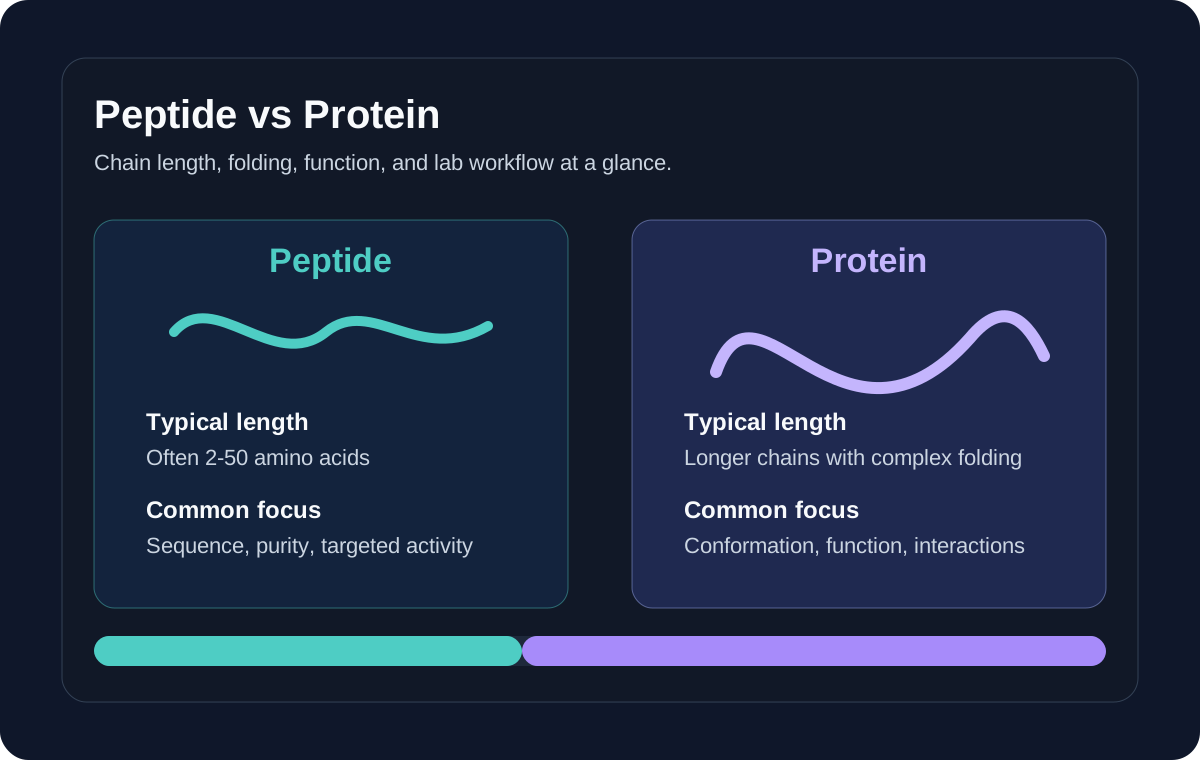
Use the peptide vs protein guide when a listing or paper blurs short-chain and full-protein language.
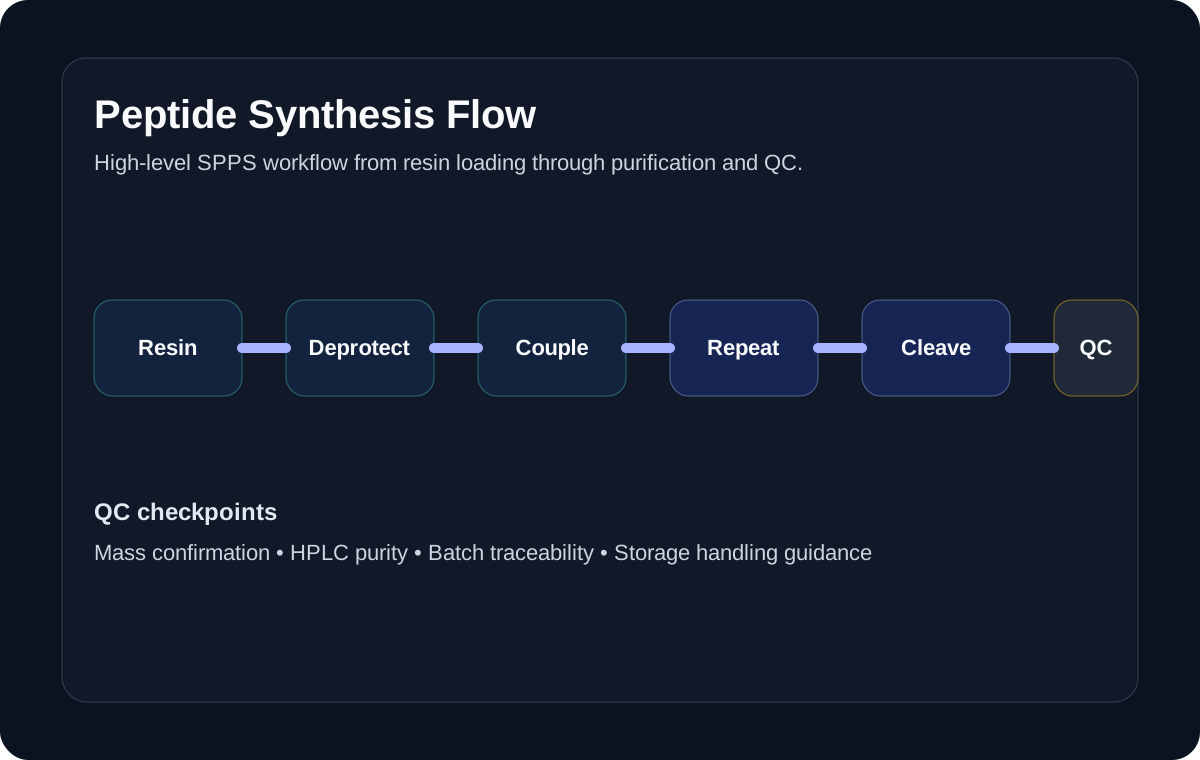
QC language matters. Purity, mass confirmation, and batch traceability tell you more than a headline claim.
Why Documentation Matters Before a Vendor Click
Research peptide pages often compress quality into one headline purity number. That is not enough. Better comparison starts with documentation: lot-specific identity support, chromatographic context, mass confirmation, batch traceability, and handling guidance. The science guides below help you interpret the terms vendors use, and the checklist keeps the affiliate path secondary to the evidence you can actually inspect.
Documentation-First Vendor Review Framework
Peptides.page works best when you treat it as a documentation and interpretation layer before any partner click. The core question is not whether a vendor uses attractive language. It is whether the listing gives you enough concrete material to understand what was synthesized, how purity was measured, how identity was supported, and whether the batch details are specific enough to compare one listing against another.
That is why this homepage now leads with documentation language first, then uses the science guides to explain the underlying terms. If a listing says 99% purity, SPPS, LC-MS confirmed, or research use only, you should know what each phrase does and does not prove.
Amino Acids: The Fundamental Building Blocks
Amino acids are organic compounds that serve as the fundamental units of all peptides and proteins. Each amino acid contains an amino group (-NH2), a carboxyl group (-COOH), and a unique side chain (R group) that determines its chemical and biological properties.
🎯 The 20 Standard Proteinogenic Amino Acids
- Nonpolar/Hydrophobic (9): Glycine, Alanine, Valine, Leucine, Isoleucine, Methionine, Phenylalanine, Tryptophan, Proline
- Polar/Hydrophilic (6): Serine, Threonine, Cysteine, Tyrosine, Asparagine, Glutamine
- Positively Charged (3): Lysine, Arginine, Histidine
- Negatively Charged (2): Aspartic acid, Glutamic acid
🔬 Chemical Structure and Properties
Every amino acid shares a common backbone structure with the general formula NH2-CHR-COOH, where R represents the variable side chain. This side chain determines each amino acid's unique properties, including hydrophobicity, charge, size, and chemical reactivity.
Peptides: Structure, Classification, and Biological Significance
Peptides typically range from 2–50 residues. Their biological activity makes them essential study subjects, from signal peptides involved in communication to regulatory molecules in drug delivery systems research.
📏 Peptide Classification by Chain Length
- Dipeptides: 2 amino acids (e.g., carnosine, anserine)
- Tripeptides: 3 amino acids (e.g., glutathione, thyrotropin-releasing hormone)
- Oligopeptides: 2-20 amino acids (most bioactive peptides)
- Polypeptides: 20-50 amino acids (larger regulatory molecules)
- Proteins: >50 amino acids (distinct functional category)
🌟 Important Natural Peptides in Research
- Insulin: 51 amino acids - glucose regulation studies
- Oxytocin: 9 amino acids - social behavior research
- Vasopressin: 9 amino acids - fluid balance studies
- Enkephalins: 5 amino acids - pain pathway research
- Glutathione: 3 amino acids - antioxidant research
- GLP-1: 30 amino acids - metabolic research
Proteins: Complex Molecular Architecture
Proteins are large assemblies of one or more peptide chains folded into 3D structures. Their complexity explains functions from enzyme catalysis to collagen's role in skin health.
🏗️ Hierarchical Protein Structure
- Primary Structure: Linear amino acid sequence determined by genetic code
- Secondary Structure: Local folding patterns (α-helices, β-sheets, loops)
- Tertiary Structure: Overall 3D conformation of a single polypeptide chain
- Quaternary Structure: Assembly of multiple polypeptide subunits
🎭 Major Functional Categories
- Catalytic: Enzymes that accelerate biochemical reactions
- Structural: Provide mechanical support (collagen, elastin, keratin)
- Transport: Move molecules and ions (hemoglobin, albumin)
- Defense: Immune system proteins (antibodies)
- Regulatory: Control biological processes (hormones)
Peptide Research: Where Documentation Meets Use Context
Peptide research covers areas from signal peptides in cellular biology to peptide drugs in cancer therapy research. For this site, the practical point is that research context changes what documentation matters: a vague listing can sound impressive while still telling you very little about the sequence, analytical support, or handling assumptions behind the material.
🎯 Major Research Areas
- Structural Biology: Peptide conformation and dynamics studies
- Neuroscience: Neuropeptide function and brain signaling research
- Immunology: Antigenic peptides and immune response studies
- Cell Biology: Peptide-mediated cellular processes and signaling
- Biochemistry: Enzyme mechanisms and protein-peptide interactions
🔍 Analytical Methods
- Mass Spectrometry: Molecular weight determination
- NMR Spectroscopy: Solution structure studies
- X-ray Crystallography: High-resolution structures
- HPLC/UHPLC: Purification and analysis
Frequently Asked Questions
What documentation should a research peptide vendor provide?
Start with lot-specific identity and purity support: a certificate of analysis, chromatographic context such as HPLC or UPLC, mass confirmation, batch identifiers, and clear storage or handling notes.
Does a high stated purity number guarantee quality?
No. A high stated purity number without method details, lot traceability, or mass confirmation is not enough to compare listings responsibly.
What does Peptides.page independently verify?
Peptides.page reviews public-facing documentation, disclosure language, and whether a vendor explains research-use details clearly. It does not run independent lab testing or certify biological performance.
Research Peptide Vendor Checklist
Traffic and conversions are won before the click. If you compare research peptide suppliers, use this checklist before following any affiliate link or trusting a purity headline.
What to verify first
- Lot-specific COA: Check whether purity or analytical documentation is easy to locate before purchase.
- Label clarity: Review concentration, vial size, and batch identifiers so you are not comparing vague listings.
- Method context: Look for HPLC or related chromatographic language plus mass confirmation, not just one unsupported percentage.
- Research-use disclosures: The vendor should clearly state intended use and avoid medical-use framing.
- Shipping/storage details: Verify handling guidance and packaging expectations for the product format.
How to use Peptides.page
- Start with the three science guides below so the terminology and peptide classes are clear.
- Check vendor info before using any partner link.
- Use the newsletter if you want future research updates, guide releases, and vetted resource notes.
How Peptides.page Reviews Vendor Claims
This site is designed to be explicit about what it can and cannot support. The goal is to make the affiliate path legible, not to imply independent lab certification.
What we check
Public-facing documentation, disclosure language, batch identifiers, clarity around COAs and chromatograms, and whether a listing explains research-use handling in plain language.
What we do not verify
Independent lab purity, biological effect, sterility, or any performance claim that would require controlled testing outside the public page itself.
For the full checklist and a step-by-step review method, read Research Peptide Documentation Checklist.
Partner Offer
If you already used the checklist and the documentation guide, the link below opens the current partner catalog with code PAGE.
Check the vendor site for purity, testing details, intended use, and batch documentation.
Primary Research Resources
This site summarizes peptide basics for educational use. For deeper verification, use primary literature and database records first, then compare any vendor listing against lot-specific purity and identity documents.
Documentation Searches
Search PubMed for peptide purity, HPLC, and mass spectrometry reviews when a listing leans on analytical language.
Guide-Level Context
Search SPPS and quality-control reviews before treating a synthesis claim as meaningful proof.
Lot-specific COAs
Before any affiliate click, confirm purity, mass confirmation, batch ID, and storage guidance on the vendor side.
Deep-Dive Guides for Peptide Research Basics
If you want step-by-step topic depth beyond this overview, continue with these focused guides. Each page is written to answer specific search intent clearly and connect to the full learning path.
- Peptide vs Protein: Key Differences for definitions, folding, and lab interpretation.
- Essential Amino Acids Guide for residue-level context and terminology clarity.
- Peptide Synthesis Methods for SPPS workflow, purification, and QC fundamentals.