
Research Peptide Documentation Checklist
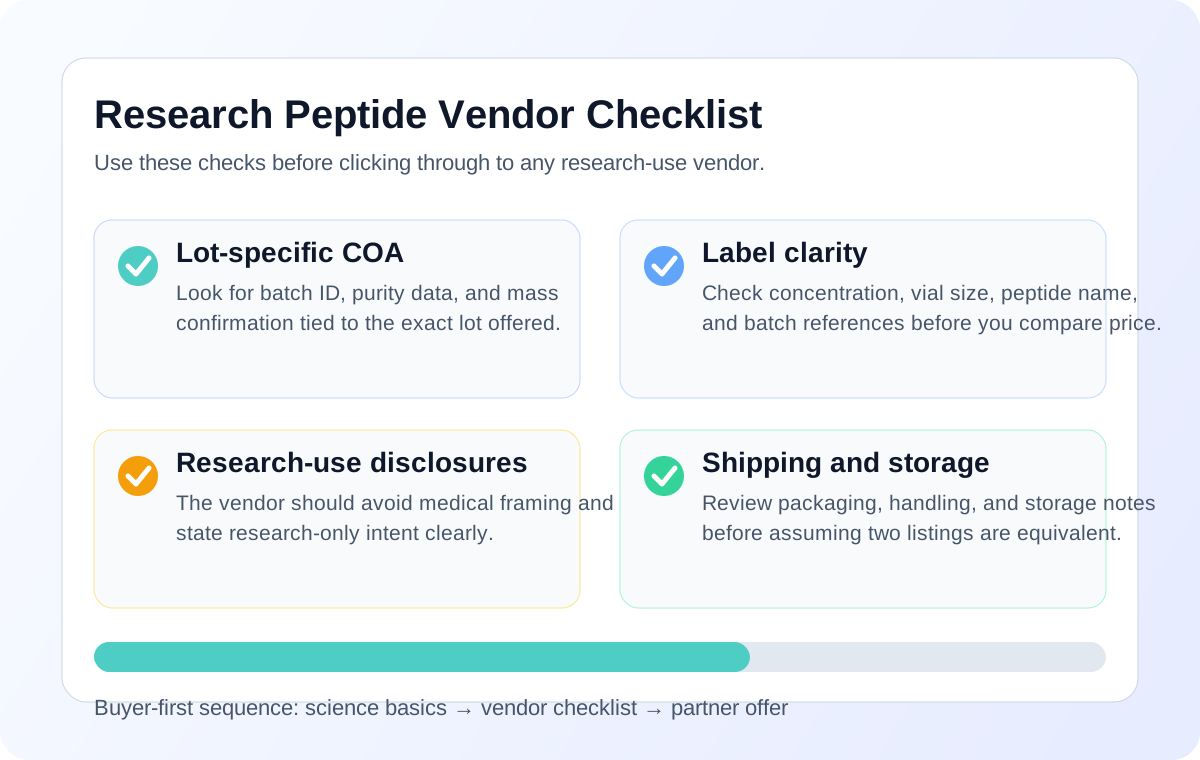
If you compare research peptide vendors, this is the page to use before you click through. It focuses on the documents and labels a listing should expose: lot-specific COAs, chromatographic context, mass confirmation, batch identifiers, and storage or handling notes that make one listing meaningfully comparable to another.
Focused resources for this topic
This page is about document review, not medical claims. Use targeted literature searches when a listing leans heavily on synthesis or QC language.
- PubMed search: peptide purity, HPLC, and mass spectrometry reviews.
- PubMed search: solid-phase peptide synthesis and quality-control reviews.
- Peptide Synthesis Methods for the process language behind the documents you are reviewing.
Why documentation beats headline purity
A listing can say 99% purity and still leave you unable to compare it responsibly. Without method context, lot traceability, or mass confirmation, the number is just a claim. Documentation is what turns that claim into something interpretable: how purity was measured, whether the lot is identified clearly, and whether the listing gives enough context to compare one batch or vendor against another.
This is why Peptides.page now treats documentation as the main review surface. The science guides help you understand the underlying terms, but the first practical question is whether the public-facing page gives you enough evidence to inspect.
Minimum documentation to request or confirm
Look for a document tied to the actual batch, not just a generic quality promise.
HPLC or related purity language should point to a method or trace, not a floating percentage alone.
Identity support should mention molecular-weight confirmation or equivalent analytical evidence.
Lot or batch IDs matter because they let documentation map to the listing you are reading.
Concentration, vial size, and product naming should be explicit enough to avoid apples-to-oranges comparisons.
Handling and storage notes help you separate a thoughtful research-use listing from vague catalog copy.
How to read the common documentation pieces
Certificate of analysis
A COA is most useful when it is lot-specific, clearly dated, and tied to the same product labeling you see on the page. If the page references a COA but makes it hard to locate or match to the listing, treat that as weaker evidence.
Chromatographic purity language
Purity percentages mean more when the page also shows the method context or refers to HPLC or equivalent analytical support. The practical question is not “does the number sound high,” but “is there enough context to understand what the number came from.”
Mass confirmation
Mass confirmation supports identity. If a page mentions LC-MS, MALDI, or molecular-weight confirmation, that is usually stronger than a percentage alone because it signals an identity check rather than only a marketing summary.
Batch traceability and handling notes
Batch identifiers, storage expectations, and packaging details are often the simplest signs that the listing was built for careful comparison rather than vague catalog traffic.
What Peptides.page checks and does not verify
What this site checks
- Whether public-facing documentation is easy to locate and compare.
- Whether a listing explains research-use context clearly.
- Whether the page gives enough batch, purity, and identity detail to support a careful review.
What this site does not independently verify
- Independent lab purity or identity testing.
- Biological effect, assay performance, or any clinical outcome.
- Sterility, safety, or any claim that would require off-page testing to confirm.
Common red flags when reviewing a listing
- A high purity number with no method context.
- No visible lot or batch identifiers.
- Research-use language that is vague while marketing claims are specific.
- Storage or handling details that are missing entirely.
- Documentation mentions that are hard to match to the product page itself.
None of these red flags prove the material is unusable, but they do weaken the public evidence available to a careful reviewer.
Frequently Asked Questions
What is the first document to look for on a research peptide page?
Start with a lot-specific COA or equivalent identity and purity support, then check whether the listing also explains chromatographic context, mass confirmation, and batch traceability.
Is a purity percentage enough by itself?
No. Without method context, lot identifiers, or mass confirmation, the number is too thin to support careful comparison.
Does Peptides.page perform independent lab testing?
No. It reviews public-facing documentation and disclosure surfaces. It does not run independent lab testing or certify biological performance.